 THE GROWING WORLD OF DAHLIAS

|
a). To compare the seedlings from eight seed parents for:-
1). Their colour range. (Seed parents of exhibition quality that produce
seedlings
largely of the same colour are obviously not going to yield many distinctively
different varieties. Equally any producing colours that are not vibrant are best
avoided).
2). The dates on reaching their first flower. (For seedlings selected for trial
in 2005
this information will be checked to see if it is relevant for predicting early,
mid
season or late flowering varieties, so that the best stopping dates are used).
3). The percentage of seedlings to form true collerettes.
4). What percentage have exhibition potential? (Are there super parents?)
5). Eccentricities � double blooms etc.
6). The percentage that have excess petals.
7). The percentage to reach first flower relative to the number of seeds
planted.
(Do some seed parents produce less viable seed?)
b). To compare the effect of pollination on a variety which is grown in two
environmentally different locations.
The selected variety (Sue Mountjoy which has a good record for producing
winning offspring), is to be grown under a tunnel cover in one location and in
the
open in another location. Although the locations were not far apart the insect
population is different. The main pollinators of collerettes here in Tiverton
are butterflies and bumble bees. Plenty get into the tunnel and visit many
flowers, but then rise and spend a lot of time trying to get out. Observation
indicates that the trauma results in their departing as far away as quickly as
possible. So a different set of pollinators visits the uncovered plants.
c). To grow approximately 100 seedlings of each variety so that the results are
statistically significant.
THE SEED PARENTS SELECTED
| 1). SUE MOUNTJOY which was located in the tunnel. Seedling numbers
preceded by C (for Covered). The seed parent is not known. Deep red and
unusual pink collar.
|
 |
| 3). DEMI SCHNEIDER. Seed parent � Sue Mountjoy. Will good attributes
be passed on or poor ones persist? This variety has a very vibrant
colour. Seedling numbers preceded by S. Demi Schneider was one of the varieties which won the NDS collerette championships in 2003 and 2004 and has been selected for trial at Wisley in 2005. Named after my elder daughter. |
 |
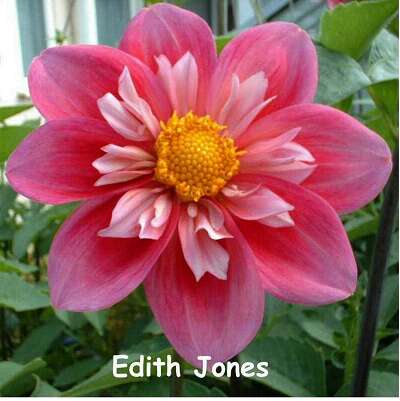
| 4). EDITH JONES. Seed parent � Sue Mountjoy. Will its excessive
height persist in the seedlings? This variety has distinctive colouring
� a red blush on pink. Seedling numbers preceded by J. Named after my 87 year old mother-in-law. One of the varieties in the winning entry of the NDS collerette championship in 2003. |
 |
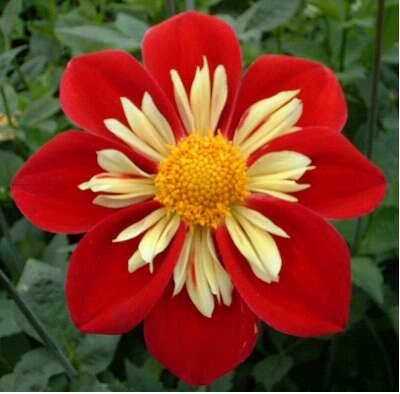
| 5). JACQUIE HURST. Seed parent � Sue Mountjoy. Will it pass on its
classic form? Seedling numbers are preceded by H. One of the varieties used in the winning entry of the NDS collerette championship in 2003. Named after a friend from Finchley, North London. |
 |
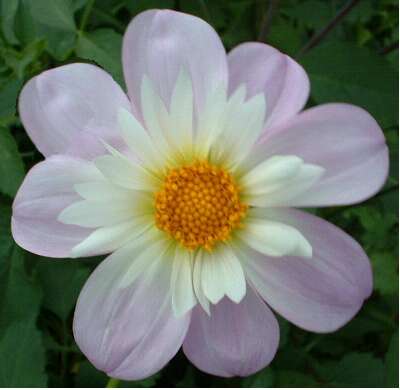
| 6). TEESBROOKE AUDREY. From Phil Orley, this variety is of delicate
lilac and white blends. What effect will the pollen of my strongly
coloured plants have? This variety forms a large very floriferous plant. Seedling numbers are preceded by A. This variety originates from the north east of England. Will the delicate pastel shades appear in any of this year�s seedlings? |
 |
|
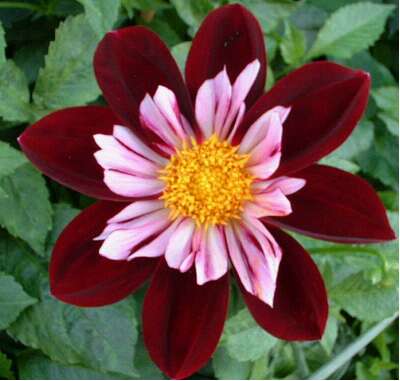
7). DEE MORRELL. Seed parent � Maureen Kitchener (this is a
waterlily dahlia which had a collerette parent).
|
 |
| 8). PATRICIA. Of New Zealand origin this variety has an intense and
eye-catching colour and large flowers. The stems therefore tend to bow
in an arc so the flowers are set at a poor angle for exhibition. Its
origin makes this one interesting and therefore worth testing. Seedling numbers preceded by P. |
 |
Last updated: February 26, 2012.